

-
أمن : +86 20 8278 0427
-
بريد إلكتروني : info@stsystemplc.com
أمن : +86 20 8278 0427
بريد إلكتروني : info@stsystemplc.com
Pure solar street lighting can be useful in off-grid roads with strong sunlight and simple operation requirements. But when the project requires higher uptime, rainy-season resilience, asset monitoring and long-term municipal management, pure solar may not be enough.
Smart Hybrid Solar-Grid Street Lighting keeps the solar advantage while adding grid fallback, battery-assisted continuity, smart dimming, GPS monitoring, anti-theft alarms and local gateway control.
Pure solar is a good fit for some off-grid roads, but Smart Hybrid Solar-Grid is usually stronger when the owner needs higher reliability, monitoring and fallback paths.
The procurement question is not whether solar is good. The question is whether pure solar alone can carry the full project risk.
Do not ask only: Is the solar panel large enough?
Ask instead: Can the lighting system survive low sunlight, battery aging, theft risk and maintenance delays while keeping records reviewable?
Pure solar can be a practical choice when sunlight is strong, load is modest, road importance is lower, maintenance access is simple and the project accepts limited fallback during abnormal weather.
Strong solar resource, low lighting load, simple road class, manageable theft risk and reliable battery maintenance.
Long rainy seasons, strict uptime, exposed assets, weak maintenance teams or government owners requiring reviewable operating records.
The comparison should focus on project boundaries, not slogans.
| Item | Pure Solar Street Lighting | Smart Hybrid Solar-Grid | Buyer Risk | Procurement Judgment |
|---|---|---|---|---|
| Power source | Solar panel and battery. | Solar + grid fallback + battery + smart control. | Pure solar depends heavily on weather and battery health. | Hybrid adds more survival paths. |
| Rainy season | Risk rises after several low-sunlight days. | Grid fallback can support solar shortage. | Dark roads may appear after prolonged bad weather. | Hybrid is stronger for strict uptime. |
| Battery sizing | Often oversized or underquoted. | Can be balanced with dimming and fallback logic. | Battery replacement cost may be hidden. | Ask for lifecycle assumptions. |
| Monitoring | Often optional in low-cost projects. | Can integrate GPS, alarm, controller and gateway records. | Blind failures cause maintenance delay. | Owner visibility matters after handover. |
| Best fit | Off-grid roads with strong sunlight and simpler requirements. | Municipal roads, weak-grid cities, parks, ports and industrial zones. | Wrong fit causes complaints and replacement cost. | Match architecture to road importance and maintenance reality. |
In solar lighting, battery health and weather margin decide long-term performance.
| Risk Item | Pure Solar Risk | Hybrid Solar-Grid Response | Buyer Evidence to Request |
|---|---|---|---|
| Several rainy days | Battery may not recover enough for full-night operation. | Grid fallback can support lighting when solar input is low. | Rainy-season design assumptions and fallback policy. |
| Battery aging | Capacity drops over time and can reduce night hours. | Dimming, grid support and monitoring can reduce blind failure. | Battery replacement plan and status monitoring method. |
| Panel dirt or damage | Solar generation drops and may remain unnoticed. | Monitoring can identify abnormal charging or output. | Maintenance records and abnormal status alarms. |
| High load demand | Requires larger panel and battery. | Load can be managed with schedules and zones. | Dimming policy and safety-level definition. |
| Theft / vandalism | Panel and battery exposure can create risk. | GPS identity, cabinet alarms and offline alerts can be added. | Anti-theft acceptance test and asset list. |
Before buyers accept any backup claim, they should first ask whether the supplier understands real field-control pressure. Long-road and tunnel lighting projects require more than a lamp and a battery. They require control continuity, communication reliability, maintenance visibility and project-level acceptance logic.
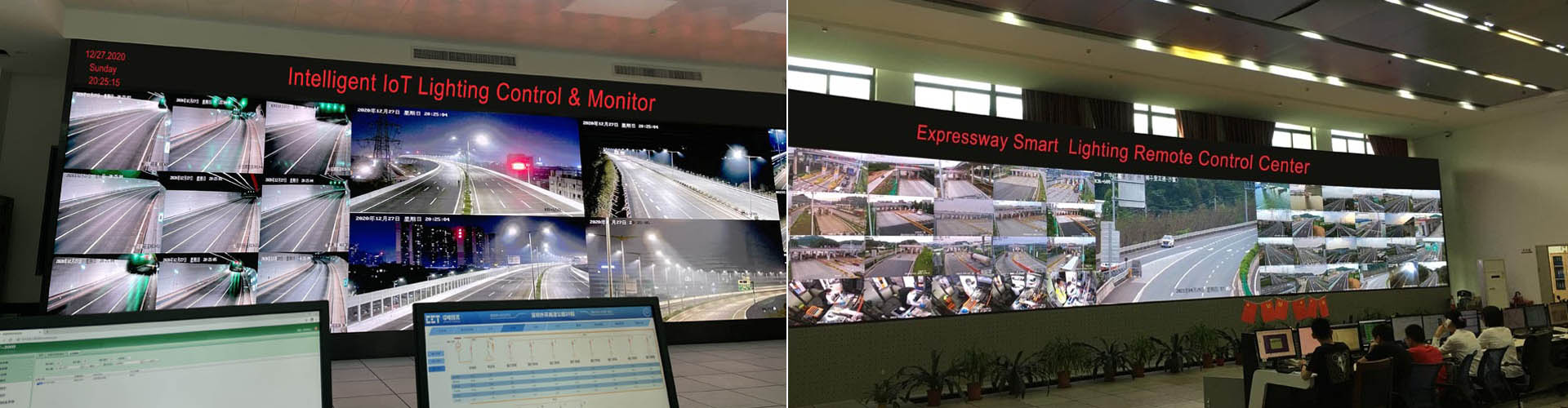
For municipal solar-grid lighting, control cannot depend only on a remote dashboard. Local schedules and gateway records help the owner keep operation stable during communication interruptions.
| Requirement | Pure Solar Low-Cost Risk | Hybrid Solar-Grid Gateway Logic | Owner Benefit |
|---|---|---|---|
| Lighting schedule | Simple controller may be hard to review remotely. | Gateway/controller can store schedules and scenes. | Operation remains predictable after handover. |
| Energy policy | Charging/discharging logic may be hidden. | Solar priority, grid fallback and dimming policy can be documented. | Owner understands how the system uses energy. |
| Fault visibility | Failure may be discovered by road complaints. | Alarms and asset status can be monitored. | Maintenance becomes proactive. |
| Security-sensitive projects | Public-internet dependence may be rejected. | Private network, local server or owner monitoring center can be considered. | Better fit for government and infrastructure projects. |
Brand reputation, cloud dashboards and software screenshots are useful, but weak-grid lighting projects need a deeper acceptance standard. Buyers should compare whether the supplier can keep lighting powered, monitored, protected and locally controllable after handover.
| Comparison Target | Typical Strength | Buyer Should Also Check | Why Hybrid Solar-Grid + Local Gateway Matters |
|---|---|---|---|
| Signify / Interact-style platforms | Mature global lighting platform, cloud dashboard and city-scale data management. | Can the system remain controllable when internet access is interrupted or local operation is required? | Weak-grid projects need field autonomy, solar/grid power logic and owner-reviewable records together. |
| Schreder-style outdoor lighting solutions | Strong municipal lighting experience, luminaire engineering and project recognition. | Does the solution include hybrid power design, battery takeover logic and local gateway fallback? | The buyer must judge the complete lamp, power and control chain. |
| Telensa / wireless control platforms | Recognized wireless street lighting control and large node management logic. | Can wireless control be combined with power-failure evidence, GPS identity and battery/grid switching verification? | Connectivity is useful, but lighting continuity decides whether the road stays safe during outages. |
| Tvilight-style adaptive platforms | Adaptive lighting, sensor dimming and energy-saving storytelling. | Are outage records, battery status, asset identity and maintenance actions reviewable after handover? | Dimming becomes stronger when it is connected with solar-grid charging strategy and local control schedules. |
| Itron / city network providers | Network infrastructure, city data integration and communication experience. | Is the comparison mainly about connectivity, or does it solve real power instability? | A lighting project needs both communication and power resilience. |
| Flashnet / inteliLIGHT-style systems | Remote lighting management, controller ecosystem and platform visibility. | Can the system integrate hybrid power strategy, anti-theft alarms, offline schedules and gateway records? | Weak-grid markets require remote control plus local survival logic. |
| CIMCON / Dimonoff-style platforms | Smart city IoT, lighting control and operation visibility. | Can the supplier show solar input, grid fallback, battery support and controller status during outage? | The strongest answer combines platform visibility with visible power switching response. |
| UPS-centered backup suppliers | Familiar electrical backup concept and clear fit for short emergency loads. | Is UPS being used for short backup, or incorrectly expected to support city-wide full-night lighting? | UPS is backup thinking; hybrid solar-grid is power-resilience thinking. |
This is the shock point for unstable-grid buyers. After the engineering evidence video, the buyer should see the power-failure response directly: grid power is interrupted, the lamp does not go dark, and battery-assisted lighting takes over.
Before choosing pure solar or Hybrid Solar-Grid, buyers should require evidence that connects power behavior with control records.
| Evidence Required | Weak Answer | Stronger Answer | Why It Matters |
|---|---|---|---|
| Solar/grid switching | Only architecture diagram. | Video or test record showing AC disconnection and solar/battery continuity. | Shows real fallback behavior. |
| Battery status | Only capacity number. | Battery health, charging policy and replacement assumptions are documented. | Prevents hidden lifecycle cost. |
| Rainy-season logic | General claim that design supports rainy days. | Load, autonomy, dimming and grid fallback are explained. | Weather risk must be sized, not guessed. |
| Asset monitoring | Optional GPS or alarm. | GPS identity, abnormal offline alarm and maintenance record. | Solar assets are exposed and need visibility. |
| Handover records | User manual only. | Asset list, controller status, alarm history and operating policy delivered. | Owner needs evidence after the supplier leaves. |
Use these questions to decide whether pure solar is enough or Hybrid Solar-Grid is safer.
Pure solar street lighting has a clear role, but it should not be stretched beyond its boundary. For weak-grid municipal projects requiring higher uptime, monitoring and lifecycle control, Smart Hybrid Solar-Grid Street Lighting gives buyers a safer and more reviewable architecture.
Pure solar solves installation independence; Hybrid Solar-Grid solves long-term power resilience.
Download More Technical Documents
عنوان : F4,Bldg A, Hanzhong Industrial Park, No.67, North of Xinsha Ave, Xin Tang, Zeng Cheng, Guang Zhou, China
أمن : +86 20 8278 0427
بريد إلكتروني : info@stsystemplc.com
بريد إلكتروني : morrison426@163.com