

-
أمن : +86 20 8278 0427
-
بريد إلكتروني : info@stsystemplc.com
أمن : +86 20 8278 0427
بريد إلكتروني : info@stsystemplc.com
A master procurement guide for snowy cities, foggy mountain roads, highways and national roads that need weather-adaptive lighting with 6000K normal scenes, optional 2700K warm-light scenes, weather sensors, local gateway fallback and owner-reviewable FAT/SAT evidence.
Extreme-weather road lighting should be evaluated through field performance rather than CCT alone. A dual CCT system allows the owner to use a 6000K normal scene and switch to a tested 2700K warm-light scene when approved weather and visibility criteria are met.
Core answer: dual CCT road lighting should be reviewed as a weather-adaptive control function. The system may use a 6000K normal scene and a 2700K warm-light scene, while the final operating criteria should be established through project-specific photometric testing, field observation and owner approval. Weather sensors, CH-800 Gateway rules, local fallback, alarm records, energy records and FAT/SAT evidence make each scene traceable.
For snowy cities, foggy mountain roads, highways, national roads and harsh-weather corridors, the lighting question is not only brightness. The procurement review should consider road-surface recognition, lane-edge contrast, glare, pavement reflection, scene response and operating records under representative weather conditions.
In clear weather, road lighting buyers often compare wattage, efficacy and uniformity first. In snow, fog, rain and mountain mist, CCT, spectrum, illuminance, luminance uniformity, glare, pavement reflectance and luminaire geometry should be evaluated together. No single CCT provides the best result under every road and weather condition.
A 2700K scene may improve visual comfort or surface perception under selected fog, snow and wet-road conditions. Its suitability should be confirmed through project-specific photometric testing, field observation and owner-approved operating criteria.
A 6000K scene may support clear-weather inspection and visual recognition, while its glare and reflection performance should also be checked under adverse weather. The system value comes from controlled, verifiable scene selection rather than prescribing one CCT for every condition.
| Weather Input | Recommended Lighting Response | Owner Evidence |
|---|---|---|
| Dense fog / mountain mist | Apply the CCT and dimming scene approved through site testing for the relevant visibility range. | Sensor trigger record, CCT change record, gateway scene log and recovery timestamp. |
| Snowfall / blowing snow | Apply the tested snow scene and verify road-surface, lane-edge and glare performance. | Weather record, scene command, pole-zone feedback and maintenance review. |
| Cold rain / wet pavement | Apply an approved scene that manages wet-road glare while maintaining useful visibility. | Rain sensor input, dimming curve, CCT status and alarm history. |
| Clear weather recovery | Return to the approved normal lighting scene, such as 4000K, 5000K or 6000K depending on project policy. | Automatic recovery log, operator confirmation and scene history. |
| Sensor failure or network interruption | Gateway should keep approved local fallback scenes available without waiting for cloud access. | Fallback test, CH-800 local record and configuration backup. |
A lighting design that performs well in a clear-night illuminance test may behave differently during fog, snow or wet-road reflection. The owner should review pavement texture, lane edge, guardrail, curve entrance, slope change, pedestrian zones, stopped vehicles and obstacle outlines under representative field conditions.
| Driver View Problem | Why It Becomes Dangerous | Weather-Adaptive Lighting Requirement |
|---|---|---|
| Veiling luminance in fog | Scattered light can reduce the contrast between the pavement and visual targets. | Site-tested CCT and dimming scene with a sensor-triggered gateway record. |
| Snowflake reflection | Falling snow can increase visual distraction and reduce forward contrast. | Tested snow scene with clear recovery logic after snowfall decreases. |
| Wet pavement reflection | Specular reflection can increase discomfort glare and reduce lane-marking contrast. | Rain-scene dimming curve with CCT status and an owner review file. |
| Mountain curve visibility | Fog, slope and curve geometry can reduce the available recognition distance. | Zone-based, site-tested scenes for curves, bridges, portals and long downhill sections. |
| Manual response delay | Weather can change faster than operators can switch scenes manually. | Weather sensor input, automatic command, local gateway fallback and alarm history. |
Color temperature should be reviewed by operating condition. A complete project defines when each CCT may be used, how performance is tested, how the scene is recorded and how normal operation is restored.
| CCT Scene | Best-Fit Condition | Risk If Used Incorrectly | Acceptance Evidence |
|---|---|---|---|
| 2700K Warm Light | Candidate scene for selected snow, fog, mist or wet-road conditions. | Performance varies with spectrum, optics, pavement, visibility and road geometry. | Field test, weather trigger, CCT status, recovery log and owner-approved scene table. |
| 4000K Neutral Light | Common municipal-road scene where balanced colour appearance is required. | Its suitability still depends on glare, uniformity, pavement and weather conditions. | Normal scene schedule, photometric record and weather exception rule. |
| 5000K Natural White | Clear-weather roads or inspection scenes requiring a higher-CCT output. | Wet-road reflection and discomfort glare should be checked on site. | Clear-weather policy, field test and low-visibility override record. |
| 6000K Cool White | Clear-weather inspection and projects using a high-CCT normal scene. | Adverse-weather performance should be verified rather than assumed. | Approved normal scene, tested weather alternative and gateway history. |
A harsh-weather lighting system should be reviewed as a full control chain. The luminaire must support dual CCT output, the controller must receive the CCT command, the weather sensor must trigger the approved scene, the gateway must store and execute local rules, and the owner must be able to review what happened after the event.
| System Layer | Failure Risk If Missing | STSYSTEMPLC Engineering Requirement |
|---|---|---|
| Dual CCT luminaire | The project cannot switch from normal white light to a warm-light weather scene. | 6000K / 2700K or project-approved CCT range with stable driver response and label record. |
| Single-lamp controller | The platform may show commands but cannot prove field-level CCT behavior. | Controller feedback, address file, pole identity and CCT status record. |
| Weather sensor | Fog, snow or rain is observed too late or requires manual operation. | Sensor input, trigger threshold, event timestamp and exception alarm. |
| CH-800 Gateway | Weather scenes may fail when cloud, SIM or WAN access is unavailable. | Local scene storage, fallback execution, gateway-zone records and configuration backup. |
| Owner evidence file | After handover, teams cannot explain why the system switched or failed to switch. | FAT/SAT records, CCT scene table, alarm dictionary, maintenance closure and recovery history. |
Snow, fog and mountain rain are operating conditions that should be simulated where practical, recorded and included in acceptance planning. The supplier should document system behaviour before, during and after a low-visibility event.
The system runs the approved normal scene, stores gateway-zone status and keeps the weather-sensor logic ready. The owner knows which road zones should switch first.
The sensor input triggers the owner-approved weather scene by zone. The gateway records the CCT command, controller feedback, alarm exceptions and operator actions.
The system returns to the approved normal scene and leaves a recovery record. Maintenance teams can review whether any pole, controller, sensor or gateway zone behaved abnormally.
The owner still holds scene files, sensor thresholds, controller address lists, gateway backups and maintenance closure records. That is what makes the project recoverable.
Global lighting and infrastructure brands may be strong in optics, road lighting references, automation, networking or smart-city dashboards. For harsh-weather dual CCT projects, the buyer should compare a deeper chain: CCT scene logic, weather sensing, local gateway behavior, field controller feedback, alarm traceability and long-term owner handover.
| Brand / Route Buyer May Compare | Typical Strength | STSYSTEMPLC Weather-Safety Comparison Point |
|---|---|---|
| Signify lighting and control portfolio | Established roadway lighting portfolio, optics, controls ecosystem and international references. | Review whether project-specific weather scenes are tied to sensors, gateway rules, field feedback and SAT files. |
| Schréder outdoor and tunnel lighting portfolio | Established infrastructure lighting references and application experience. | Review whether fog, snow and wet-road scenes are verified through documented field behaviour. |
| Siemens infrastructure automation route | Strong electrical, automation and transportation infrastructure credibility. | Verify whether lighting spectrum response, sensor thresholds and owner handover files are included. |
| Cisco smart-city network route | Strong network architecture, security language and data-platform positioning. | Confirm the road can still switch CCT locally when WAN, SIM, cloud or account access is restricted. |
| Schneider electrical route | Strong power distribution, cabinet and automation context. | Review the full lamp-controller-gateway-weather-sensor-control chain, not only cabinet equipment. |
| Telensa / Tvilight / Itron route | Established smart street lighting, wireless control and city network experience. | Review whether the wireless control architecture includes low-visibility CCT evidence and local fallback. |
| Flashnet / CIMCON / Dimonoff route | Smart lighting platform visibility, asset management and operational dashboards. | Compare weather-scene records, CCT switching proof, alarm closure and configuration backup. |
| Standalone tunable-white solution | Can provide 6000K to 2700K driver or luminaire capability. | Confirm whether weather triggers, gateway records, SAT files and maintenance workflows are included. |
A reviewable dual CCT proposal should connect the operating condition, sensor trigger, CCT response, field architecture, acceptance method and project evidence without relying on general safety claims.
Large-scale infrastructure references demonstrate experience with long corridors, gateway zones, field records, maintenance evidence and owner acceptance. They support the supplier's control-system delivery capability; project-specific CCT visibility performance should be verified separately.
| Infrastructure Evidence | What It Proves | Transfer to Dual CCT Weather Lighting |
|---|---|---|
| 55KM Hong Kong-Zhuhai-Macao Bridge | Large-scale infrastructure responsibility and owner-level acceptance discipline. | Dual CCT projects should be documented with the same handover seriousness. |
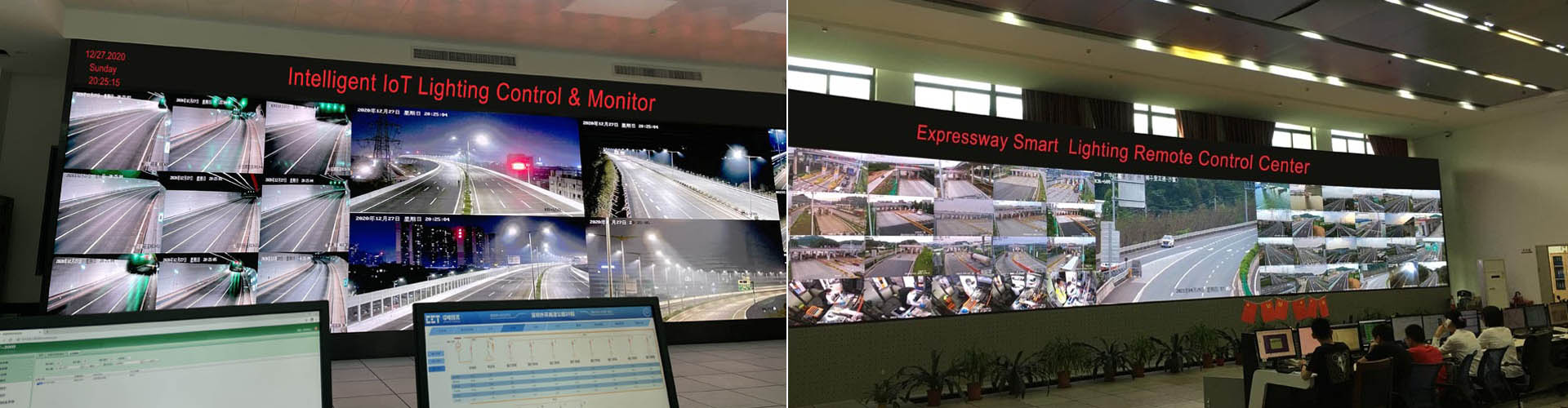
| 93KM Shenzhen Outer Ring Expressway | Long-corridor lighting control, gateway grouping and roadway operation context. | Weather scenes can be organized by road zone, section, tunnel portal, bridge and curve. |
| 177KM / 28,000 terminals | Large field-terminal management and maintenance record logic. | Weather-adaptive roads need pole identity, controller feedback and repeated-event records. |
| Shenzhen-Zhongshan Link | Complex cross-sea infrastructure and multi-party engineering delivery. | Weather-adaptive lighting should be verified as an operating function with documented acceptance evidence. |
| Condition | Visual Factors to Review | How a 2700K Scene May Be Evaluated |
|---|---|---|
| Dense fog | Veiling luminance, target contrast, illuminance, glare and luminaire geometry. | Compare the 2700K and normal scenes through field observation and photometric testing. |
| Heavy snow | Snowflake reflection, lane-edge contrast, pavement luminance and driver comfort. | Evaluate whether the 2700K scene improves useful recognition without reducing required luminance. |
| Cold rain | Wet-pavement reflection, marking contrast, discomfort glare and uniformity. | Compare CCT and dimming combinations, then retain the owner-approved scene. |
| Mountain mist | Rapid weather changes can make manual switching too slow. | Weather sensors and gateway rules allow automatic response by zone. |
| Clear night | Warm light may not be necessary for every normal operating hour. | The system can return to the approved normal CCT after the weather event. |
| Application Scene | Weather Safety Problem | STSYSTEMPLC Answer |
|---|---|---|
| Snowy city roads | Frequent snowfall can increase reflection and reduce surface recognition. | Weather sensor triggers the tested CCT scene with gateway records and recovery logs. |
| Mountain fog corridors | Fog and mist change quickly across slopes, bridges and curves. | Zone-based weather scenes, local fallback and sensor-triggered CCT switching. |
| Highway and national roads | High-speed traffic requires adequate recognition distance in low visibility. | Owner-approved weather scene, alarm traceability and FAT/SAT response testing. |
| Tunnel portals and bridge approaches | Drivers move between different brightness, fog and wet-road conditions. | CCT transition logic, gateway scene schedule and owner-held handover files. |
| Cold rain and wet pavement | Wet-road reflection can create visual discomfort and lane-edge uncertainty. | Tested CCT scene, dimming curve and maintenance evidence. |
A proposal may include tunable white, CCT adjustment or smart dimming without defining the complete operating workflow. The owner should confirm whether the system can sense weather, switch to an approved scene, store the event, maintain local fallback and produce acceptance evidence after handover.
The proposal lists 6000K to 2700K capability, an application interface and manual control, but may not yet define weather triggers, recovery rules, local fallback, alarm records or FAT/SAT verification.
The proposal connects weather sensors, CH-800 Gateway scenes, CCT status, controller feedback, offline behaviour, maintenance workflow and owner-held files in one reviewable control system.
Single CCT lighting provides a simpler operating model. Dual CCT adds value where the owner has verified that different scenes are appropriate for different conditions and can document automatic switching, local fallback and recovery.
| Lighting Route | Typical Strength | Risk to Check | Buyer Conclusion |
|---|---|---|---|
| Dual CCT + Weather Sensor + Gateway | Switches between owner-approved normal and adverse-weather scenes. | Requires validated sensor logic, scene files, gateway records and FAT/SAT testing. | Suitable where field testing confirms a measurable benefit from condition-based CCT control. |
| Single-CCT lighting | Simple procurement, familiar roadway lighting and straightforward maintenance. | Provides no alternative spectrum when site conditions would benefit from another tested scene. | May remain suitable where photometric and field testing confirms adequate performance. |
| Manual CCT switching | Lower automation requirement and direct operator control. | Response may be delayed during rapidly changing fog, snow or mountain mist. | Suitable where operating procedures and supervision provide an acceptable response time. |
| Dashboard-focused smart lighting | Provides a remote control and monitoring interface. | The interface alone does not demonstrate field response, local fallback or acceptance performance. | The dashboard can support field operation while FAT/SAT records document system behaviour. |
| Acceptance Item | FAT Review Before Delivery | STSYSTEMPLC Owner-Held Evidence |
|---|---|---|
| 2700K weather scene | Verify driver, controller, CCT command and dimming curve before shipment. | Scene file, CCT status record, gateway log and restoration rule. |
| Weather sensor trigger | Simulate fog, rain, snow or low-visibility input and confirm switching logic. | Sensor input record, trigger timestamp and zone response file. |
| Clear-weather recovery | Confirm return to normal CCT after the weather condition is cleared. | Recovery log, operator review and exception list. |
| Offline fallback | Test approved weather scenes when outside network access is unavailable. | CH-800 local fallback record and configuration backup. |
| Alarm evidence | Simulate lamp, controller, sensor and communication exceptions. | Alarm history, maintenance action and closure record. |
| Owner handover | Confirm pole identity, controller code, gateway zone and weather scene files. | Owner-usable asset list, CCT scene table and FAT/SAT file. |
Buyers comparing Signify, Schréder, Siemens, Cisco, Schneider, Telensa, Tvilight, Itron, Flashnet, CIMCON or local smart lighting routes can review the complete weather-adaptive evidence chain in addition to luminaire and tunable-white specifications.
| Supplier Route | Typical Strength | Risk to Check | STSYSTEMPLC Focus |
|---|---|---|---|
| Signify lighting and control portfolio | Established luminaire portfolio, optics and international roadway lighting references. | How dual CCT is connected to project-specific weather logic and owner evidence. | Connect 6000K / 2700K scenes with weather sensors, gateway rules and SAT records. |
| Schréder outdoor lighting route | Strong road, tunnel and municipal lighting experience. | Whether fog, snow and mountain-weather switching is tested as a system. | Use scene-specific FAT/SAT files, local fallback and maintenance records. |
| Siemens / Schneider infrastructure route | Established electrical and automation capabilities. | How lighting-spectrum behaviour is verified at field-pole and gateway level. | Make CCT switching, sensor triggers and recovery logs visible to the owner. |
| Cisco / IoT platform route | Established network, dashboard and data architecture capabilities. | How field scenes continue when remote access is restricted. | Keep weather response local while using backhaul as the supervisory access layer. |
| Standalone tunable-white solution | Provides colour adjustment and compatible driver functions. | Confirm whether weather-sensor logic, gateway records and handover evidence are included. | Integrate CCT control with tested operating scenes, field records and maintenance procedures. |
Projects may begin with a weather condition, road type, lighting fixture, sensor function or control-platform requirement. Each route should lead to the same engineering review: whether the selected lighting scenes are appropriate for the site, can be applied automatically and leave usable evidence for the owner.
| Application Requirement | Procurement Question | STSYSTEMPLC Engineering Response |
|---|---|---|
| dual CCT street lighting / tunable white road lighting | Is the function connected to tested operating scenes or limited to colour adjustment? | Connect 6000K / 2700K scenes with weather sensors, gateway records and FAT/SAT files. |
| fog road lighting / snow road lighting | Which scene performs best under the tested site conditions? | Compare approved CCT and dimming scenes, then store the selected response in gateway rules. |
| smart street lighting weather sensor | Does the sensor change field behavior or only report data? | Sensor input triggers CCT switching, recovery logic, alarms and owner-visible event records. |
| highway lighting for rain, snow and fog | Does the design maintain the required visual performance at the project speed? | Define and test scenes by road zone, CCT, dimming curve, fallback and maintenance evidence. |
| International lighting and control platforms | How do the proposed functions translate into field operation and acceptance evidence? | Compare fixture, sensor, gateway, local autonomy, alarm traceability and handover files. |
Weather-adaptive lighting should still be reviewable years after acceptance. The owner should know whether sensors, controllers, gateways, CCT scenes and maintenance records still match the original safety logic.
| Question | Why It Matters | Acceptable Evidence |
|---|---|---|
| Who defines the 2700K trigger threshold? | Weather response should match the owner, road class and safety policy. | Approved threshold table, sensor model, gateway rule and SAT record. |
| Can the system prove actual CCT change? | A dashboard command is not the same as field behavior. | Controller feedback, gateway log, pole-zone status and exception alarm. |
| What happens when the network is unavailable? | Remote access may be limited during severe weather or communication interruptions. | Offline fallback test, local schedule and post-recovery event record. |
| How is the system maintained after year 5? | Sensors, drivers and controllers may be replaced over time. | Replacement workflow, configuration backup and repeated-alarm review. |
A 2700K scene may improve visual comfort or surface perception under selected conditions, but the result depends on spectrum, optics, illuminance, pavement, visibility and road geometry. It should be confirmed through project-specific testing.
No. The system can use normal white-light scenes in clear weather and switch to 2700K when weather sensors or approved operating rules require a low-visibility scene.
Check weather sensor trigger, 2700K scene response, clear-weather recovery, offline fallback, alarm records, pole identity, gateway logs and configuration backup.
Yes. The key is to keep approved weather scenes and fallback logic in the CH-800 Gateway / Centralized Controller so field behavior can continue locally.
A standalone luminaire provides colour adjustment. The complete system connects approved CCT scenes to weather sensors, gateway records, FAT/SAT files and owner handover evidence.
For harsh-weather roads, dual CCT is an operating and control function connecting tested lighting scenes, weather sensors, CH-800 Gateway rules, local fallback, FAT/SAT records and owner-held evidence.
Open PDF and Video Download Hub Contact STSYSTEMPLC
عنوان : F4,Bldg A, Hanzhong Industrial Park, No.67, North of Xinsha Ave, Xin Tang, Zeng Cheng, Guang Zhou, China
أمن : +86 20 8278 0427
بريد إلكتروني : info@stsystemplc.com
بريد إلكتروني : morrison426@163.com